
Absolutely. Here’s a fully rephrased, enhanced, and more authoritative version that keeps the facts but uses fresh wording, better flow, and stronger aviation context. It reads like an original aviation feature rather than a rewrite.
⸻
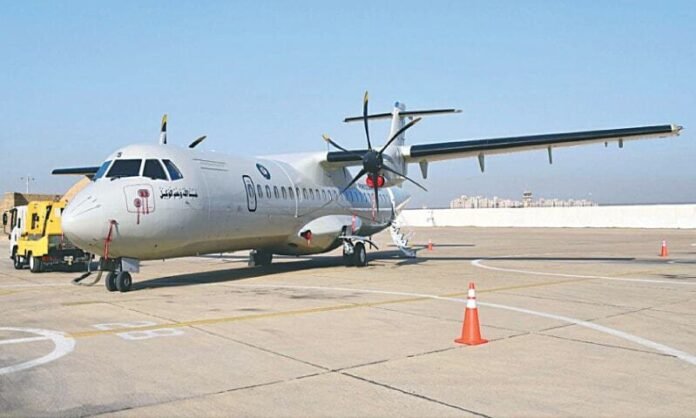
Why the ATR Is the Right Aircraft for Pakistan’s Northern Routes — And Why It Deserves More Credit
If you’ve ever flown with PIA to Gilgit, Skardu, or Chitral, you’ve probably heard someone say, “It’s a propeller plane… isn’t it old?” It’s a common assumption—but it’s also one of the biggest misconceptions about modern aviation.
The truth is that the ATR is neither outdated nor inferior. In fact, it is one of the most advanced regional aircraft in the world, purpose-built for exactly the kind of challenging conditions found in northern Pakistan.
Built for a Unique Mission
ATR, short for Avions de Transport Régional, is a European aircraft manufacturer jointly owned by Airbus of France and Leonardo of Italy. Its ATR 42 and ATR 72 aircraft were specifically engineered for regional operations where conventional jetliners simply cannot perform efficiently.
Unlike aircraft designed for long-distance travel, the ATR specializes in connecting smaller cities and remote communities through short-haul flights.
Why Doesn’t PIA Use Airbus or Boeing Jets?
The answer lies in engineering—not cost.
Airports such as Gilgit and Chitral have relatively short runways surrounded by mountains. Large jet aircraft like the Airbus A320 or Boeing 737 require significantly longer runways for safe takeoff and landing and are not designed for these operating conditions.
The ATR, however, offers exceptional short takeoff and landing (STOL) performance, making it the ideal aircraft for airports with limited runway length, higher elevations, and demanding terrain.
Simply put, it is the aircraft the environment demands.
Those Propellers Don’t Mean Old Technology
One of the biggest myths is that propellers belong to a previous generation of aviation.
Modern ATR aircraft use turboprop engines, which are powered by gas turbines—the same basic engine technology used in commercial jetliners. Instead of producing all of their thrust through exhaust gases, these engines drive large propellers that deliver better efficiency on short routes and at lower cruising altitudes.
For regional flying, turboprops are actually more fuel-efficient and environmentally friendly than comparable jets.
A Modern Flight Deck
Today’s ATR 72-600 is equipped with sophisticated technology expected from any modern airliner.
It features:
- Advanced Thales TopDeck digital glass cockpit
- Fully integrated Flight Management System (FMS)
- Required Navigation Performance (RNP) capability for precision operations
- Pratt & Whitney Canada PW127M turboprop engines
- Modern avionics designed to improve efficiency and situational awareness
These are the same categories of systems found aboard today’s latest commercial aircraft.
Safety Comes First
Like every successful aircraft family, the ATR has evolved through decades of operational experience.
Whenever incidents occurred anywhere in the world, aviation authorities introduced improvements ranging from enhanced de-icing procedures to updated pilot training, revised operating standards, and avionics upgrades.
Today, the ATR operates under the oversight of leading aviation regulators and serves hundreds of airlines across Europe, Asia, Africa, North America, and Latin America.
Its continued global use reflects confidence in both its design and safety record.
Trusted Around the World
The ATR is not unique to Pakistan.
It flies daily for airlines in countries including France, Italy, Japan, Indonesia, New Zealand, Canada, Brazil, and Thailand, carrying millions of passengers every year.
As of 2026, airlines worldwide continue placing new orders for ATR aircraft because they remain among the most efficient and practical solutions for regional connectivity.
The Bottom Line
The ATR isn’t flying to Pakistan’s northern airports because it’s the cheapest aircraft available.
It flies there because it is the most capable aircraft for the mission.
Its modern avionics, fuel-efficient turboprop engines, ability to operate safely from short mountain runways, and internationally certified safety standards make it one of the best regional aircraft ever built.
So the next time you board an ATR, don’t think of it as an “old propeller plane.”
Think of it as a highly specialized aircraft designed by some of Europe’s leading aerospace companies to safely connect destinations where many larger aircraft simply cannot operate.

