
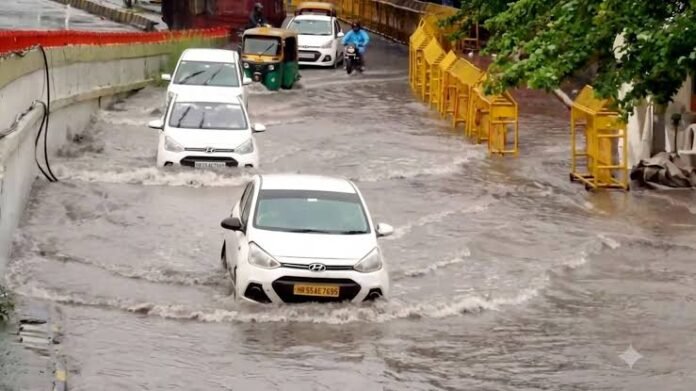
Heavy rainfall has once again exposed serious weaknesses in New Delhi’s urban infrastructure, with large parts of the capital facing waterlogging, traffic disruption and difficulties around key transport corridors.
The latest downpour on Friday inundated several major roads and underpasses, including areas around Indira Gandhi International Airport, Connaught Place, AIIMS, Mahipalpur and other parts of the capital. Palam recorded 75.6 millimetres of rainfall between 8:30am and 5:30pm, according to the India Meteorological Department.
The airport corridor was among the worst affected. Water accumulated around Terminal 3 and nearby access routes, while the Dwarka underpass was flooded and a bus was temporarily stranded. Several flights were also diverted as adverse weather and waterlogging disrupted operations at the airport.
The disruption has renewed questions about Delhi’s ability to manage intense rainfall despite repeated investments in drainage, roads and flood-control infrastructure. The problem is not limited to isolated low-lying areas; major roads and strategically important transport links can also become severely congested or waterlogged during short periods of heavy rain.
The situation has highlighted a wider challenge facing rapidly growing cities: infrastructure designed around historical rainfall patterns can struggle when intense downpours overwhelm drainage and flood-management systems.
With Delhi preparing to host the BRICS Summit next week, the latest flooding has also drawn attention to the capital’s preparedness and the coordination required between different civic and infrastructure agencies.
The recurring disruption underscores the need for long-term drainage upgrades, better storm-water management and stronger coordination between agencies rather than relying primarily on temporary pumping and traffic diversions during every major rainfall event.

