
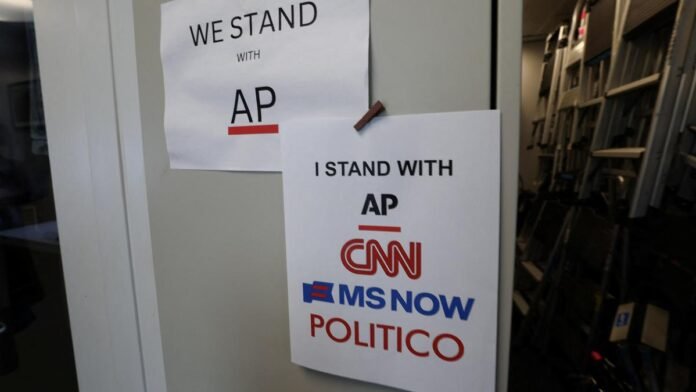
WASHINGTON — September 22, 2026: A major confrontation between the Trump administration and several US news organizations has escalated after ABC, CBS, CNN, Fox News and NBC suspended their participation in the rotating television pool that provides shared video coverage of the president.
The decision came after the White House barred journalists from CNN, MS NOW and Politico from its grounds. The three organizations subsequently filed a federal lawsuit challenging the restrictions and seeking a temporary restraining order to restore their access.
What Is the TV Pool?
The five major television networks normally rotate responsibility for covering presidential movements and events. The network assigned to the pool provides camera footage and audio that can then be distributed to other television outlets.
CNN was scheduled to handle the pool on Monday. After the White House prevented CNN from carrying out that assignment, the other four networks said they would not provide a replacement pool.
The networks said in a joint statement that the public has a vital interest in receiving accurate and independent information about the government, adding that an administration should not restrict a news organization because it objects to its reporting.
Why Were CNN, MS NOW and Politico Barred?
Trump announced the restrictions after criticizing coverage by the three outlets, accusing them of publishing what he describes as “fake news.” The White House has defended its position by arguing that access to the White House press facilities is a privilege and that the First Amendment protects the right to publish but does not guarantee a particular press credential or place in the White House press pool.
Vice President JD Vance similarly argued that the administration was not preventing the outlets from reporting, but was withdrawing what he characterized as “special access” to the White House.
Lawsuit Filed
CNN, MS NOW and Politico filed their lawsuit in federal court in Washington, arguing that the restrictions violate constitutional protections for freedom of the press and due process. They are seeking temporary court intervention while the broader dispute proceeds. A hearing has been scheduled for Wednesday.
The Unusual Result
The dispute had an immediate effect on television coverage. During a White House event on Monday, the administration’s own video feed was available, but the audio was reportedly difficult or impossible to hear clearly, leaving viewers with images of Trump speaking while helicopter noise dominated the broadcast.
The suspension applies specifically to the shared presidential TV pool; it does not mean that all US media outlets have stopped reporting on Trump. Print, radio and wire-service journalists have continued covering presidential activities.
What Happens Next?
The immediate issue is now before the courts. The lawsuit will test how far a White House can go in controlling access to journalists while still complying with constitutional protections for the press. The administration maintains that journalists can continue reporting from outside the White House, while the three organizations argue that selective exclusion based on their reporting is unconstitutional.
In short: this is not a complete media blackout of Trump. It is a dispute over White House press access that has led the five major TV pool networks to suspend their shared presidential coverage, creating an unusual situation in which the White House can release its own video while the normal independent television pool is not operating.

