
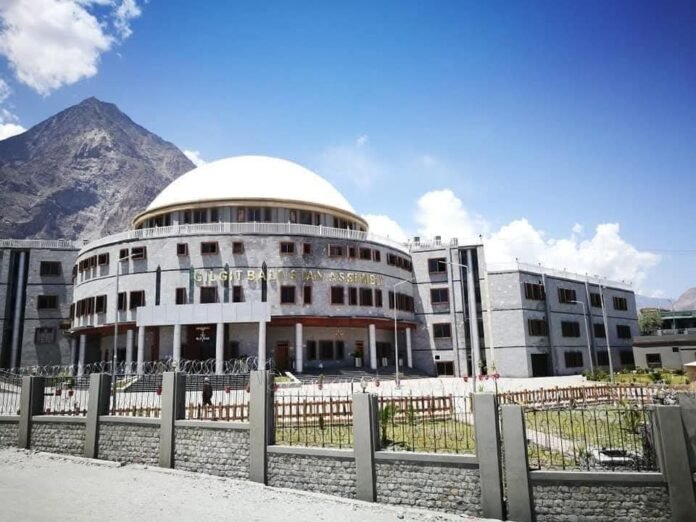
GILGIT, September 2026: Gilgit-Baltistan has approved a Rs218 billion budget for the 2026–27 fiscal year, combining spending cuts and austerity measures with increased allocations for social protection, healthcare, education, agriculture and employment.
The budget was unanimously approved by the provincial cabinet. It includes Rs23 billion for development expenditure and Rs28 billion for non-development spending, while the overall budget size rises to Rs218 billion after the inclusion of the federal government’s stabilisation package.
30% Cut In Non-Development Spending
As part of its austerity drive, the Gilgit-Baltistan government has decided to reduce the non-development budgets of government departments by up to 30%. The measure is aimed at controlling administrative expenditure and creating fiscal space for essential services and development programmes.
Minimum Wage Increased To Rs44,000
The government has also increased the minimum monthly wage from Rs40,000 to Rs44,000 for employees working in government and private institutions.
The increase is intended to provide some relief to workers amid rising living and transportation costs.
Rs1bn Allocated For Social Protection
For the first time, the government has allocated Rs1 billion specifically for social protection. In addition, a Rs4 billion endowment fund has been proposed to support social-sector initiatives and welfare programmes.
Healthcare And Education Get Additional Support
The budget provides an additional Rs170 million for medicines, while funding for the Health Endowment Fund has also been increased.
Additional resources have been proposed for scholarships to support high-achieving students and provide greater educational opportunities.
For the agriculture sector, Rs50 million has been proposed for water-management initiatives aimed at improving water availability and supporting agricultural activity.
Climate Fund Introduced
The government has introduced a new climate-related financing mechanism under which 1% of development project allocations will be deducted and placed into a consolidated climate fund.
The initiative is aimed at creating dedicated resources for climate-related projects and environmental challenges facing the mountainous region.
Hybrid Vehicles To Replace Fuel-Heavy Cars
In another austerity measure, government departments will move towards purchasing hybrid vehicles instead of fuel-intensive cars. Older vehicles with high fuel consumption will be auctioned as the government seeks to reduce fuel and operational expenses.
Government To Reduce Development Backlog
Chief Minister Amjad Hussain said the region’s growing development “throw-forward” had slowed the implementation of development schemes.
He said the government would work to reduce the development backlog and accelerate ongoing projects so that allocated funds could translate into completed infrastructure and public services.
The chief minister also said equal development allocations had been made for government and opposition members for the first time, with the aim of promoting a more balanced distribution of development resources.
Focus On Transparency
The budget has been prepared against the backdrop of rising fuel prices and broader economic challenges facing the country. The government says its objective is to maintain fiscal discipline while protecting spending on essential public services and welfare.
Chief Minister Amjad Hussain also directed officials to improve transparency in the preparation of PC-1 documents, tendering procedures and implementation of development schemes. He stressed that development funds should be utilised efficiently and produce tangible results for the people of Gilgit-Baltistan.

