
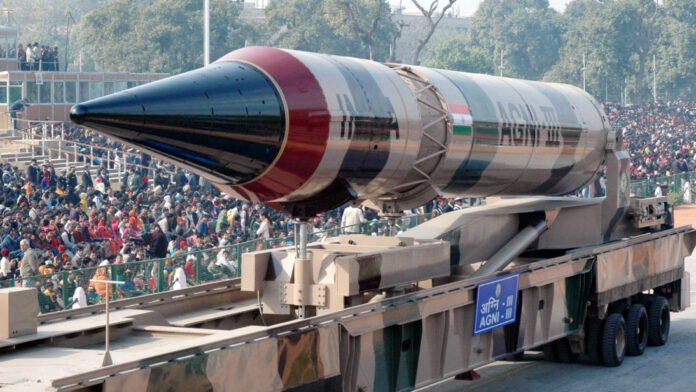
SIPRI Report Says India Has Operationally Deployed Nuclear Warheads for First Time
ISLAMABAD: India has operationally deployed nuclear warheads during peacetime for the first time, according to the latest yearbook released by the Stockholm International Peace Research Institute (SIPRI), marking a significant shift in New Delhi’s nuclear posture.
The SIPRI Yearbook 2026 estimates that India possessed approximately 190 nuclear warheads as of January 2026, an increase from 180 warheads the previous year. Of these, around 12 warheads are believed to be operationally deployed, likely aboard a ballistic missile submarine conducting periodic deterrence patrols.
The development represents a departure from India’s longstanding practice of keeping nuclear warheads separated from their delivery systems during peacetime. SIPRI attributes the shift in part to the induction of canisterised missile systems, which allow warheads to remain mated with missiles and ready for rapid deployment.
India has continued to modernise its nuclear triad—comprising land-based missiles, aircraft, and sea-based platforms—with a growing emphasis on survivable second-strike capabilities. The country’s expanding fleet of nuclear-powered ballistic missile submarines is seen as a key component of this strategy.
Security analysts in Pakistan are closely monitoring the development amid the evolving strategic balance in South Asia. One defence analyst described the report as evidence of a more operationally ready nuclear force, suggesting that India’s deterrence posture is becoming increasingly sophisticated and responsive.
Indian authorities have not publicly commented on the specific SIPRI assessment. New Delhi continues to maintain its official doctrine of “No First Use” while emphasising a policy of credible minimum deterrence.
According to SIPRI estimates, Pakistan’s nuclear arsenal remains relatively stable at approximately 170 warheads. While India maintains a numerical advantage of around 20 warheads, analysts note that strategic stability in the region depends not only on stockpile size but also on delivery systems, operational readiness, and command-and-control structures.
The report further highlights India’s ongoing investment in advanced delivery platforms, including longer-range ballistic missiles and submarine-launched nuclear systems. The Arihant-class nuclear-powered ballistic missile submarines remain central to India’s efforts to strengthen its sea-based deterrent and enhance the survivability of its nuclear forces.

