
Syria Proposes New Energy and Trade Corridor Amid Regional Tensions
Amid rising geopolitical tensions in the Middle East and concerns over global trade disruptions linked to instability around the Strait of Hormuz, Syria has put forward a proposal to position itself as a key transit hub for energy and trade.
Syrian President Ahmed al-Sharaa recently presented the idea during a regional meeting with European leaders in Cyprus. The proposal aims to utilize Syria’s strategic geographic location to establish an alternative corridor connecting Gulf countries with Turkey and providing access to the Mediterranean Sea.
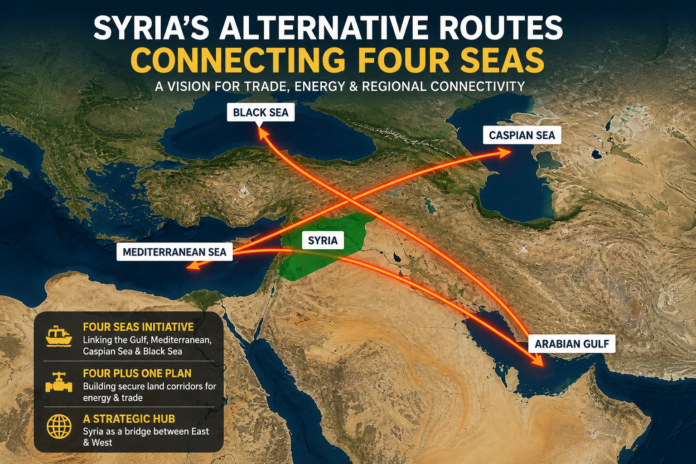
The plan is part of broader initiatives being promoted by Damascus, including the “Four Seas” project and the “Four Plus One” initiative. These frameworks seek to create an integrated network for transporting energy and goods across key regions, linking the Gulf, the Mediterranean, the Caspian Sea, and the Black Sea.
The “Four Seas” concept envisions a large-scale system of pipelines and transport routes designed to facilitate energy flow and trade across multiple regions. It includes the rehabilitation and expansion of existing infrastructure such as oil and gas pipelines. One proposal involves restoring the Kirkuk–Baniyas oil pipeline, which could connect Iraqi oil fields to Mediterranean ports, while another focuses on extending regional gas networks through neighboring countries.
Meanwhile, the “Four Plus One” initiative emphasizes the development of secure land-based energy corridors aimed at reducing reliance on traditional maritime routes. Officials suggest that these projects could collectively require investments of up to $50 billion and significantly reshape regional trade dynamics if implemented.
However, the proposals face considerable challenges. Years of conflict have severely damaged Syria’s infrastructure, while political instability, security concerns, and limited financial resources remain major obstacles. Experts note that rebuilding transport and energy networks would require extensive international cooperation and long-term investment.
Beyond Syria’s internal constraints, the plan must also compete with other major regional connectivity projects, including the India-Middle East-Europe Economic Corridor. Backed by countries such as India, Saudi Arabia, the United States and European partners, IMEC aims to link South Asia with Europe through a combination of shipping routes and rail networks across the Middle East.
Analysts highlight that Syria’s ability to move forward with its corridor ambitions will depend on improvements in security, governance, and economic stability, as well as its capacity to attract regional and international partners.
While the proposal reflects Syria’s attempt to reassert its role in regional trade and energy transit, its success remains uncertain in a competitive and rapidly evolving geopolitical landscape.

